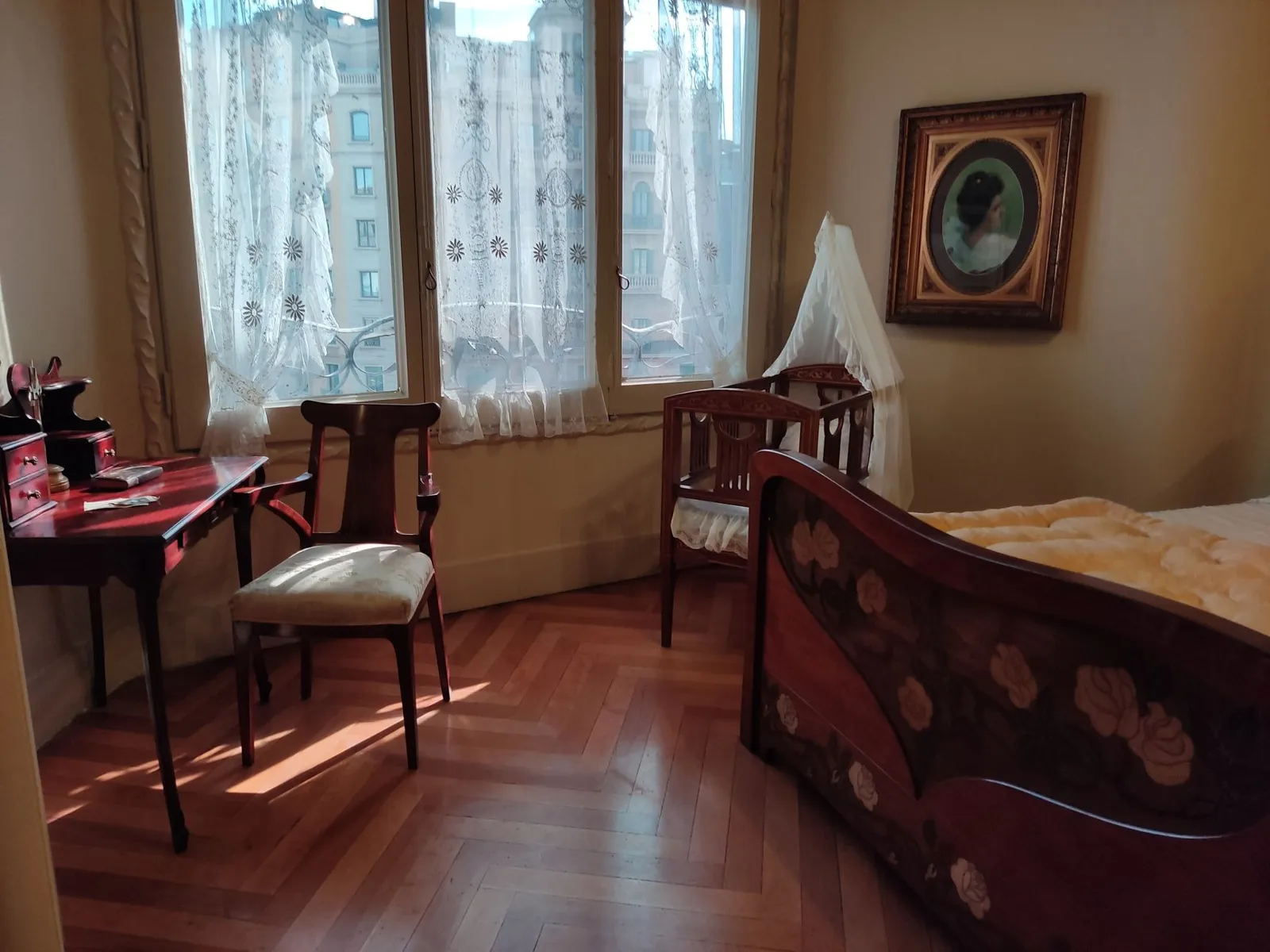
Every June we see the same three problems arrive at the workshop in the same order: a chair with a joint that has opened, a sideboard with veneer lifting along one edge, and a table top with a pale rectangle where a rug or a plant pot used to sit. None of them is a manufacturing fault. They are the result of timber doing what timber does when the air around it changes.
Wood is hygroscopic. Its cells take on moisture from humid air and release it again when the air dries. As moisture content rises, the wood swells; as it falls, the wood shrinks. Most of that movement happens across the grain rather than along its length, which is why a wide table top moves far more than the rails beneath it.
A joint is a moving joint
A well-made mortise and tenon is cut to allow a small amount of movement, but it relies on the parts staying in contact. When a table top expands across its width, it pushes against the apron. When the air dries and the top contracts, the joint can open by a fraction of a millimetre. Repeat that cycle through enough wet and dry seasons and a joint that was tight becomes a joint that rocks. The glue has not failed so much as been worked loose.
Veneer behaves differently. The thin layer of timber is glued to a substrate that may move at a different rate. At an edge, where there is less glue and more exposed end grain, a small lift can begin. Left alone through a wet season, it curls and then splits. This is one of the repairs where early intervention is genuinely cheaper: a lifted edge can often be re-glued and pressed; a torn patch needs new material and colour work.
What actually helps
You do not need a climate-controlled room. You need fewer extremes, and a little attention to where things stand.
- Keep humidity roughly stable. A dehumidifier set around 55–60% in the wet season is more useful than any polish. Do not chase a perfectly constant number; aim for gradual change rather than sharp swings.
- Move pieces away from air-conditioner vents. A direct blast of cold, dry air on one part of a table top is exactly the uneven drying that causes splits and lifted veneer.
- Leave a gap behind cabinets. External walls in Hong Kong can be damp. A 5–10 cm gap lets air move and reduces the chance of moisture sitting against the back panel.
- Control sunlight. UV fades timber and breaks down finishes. Sheer curtains are enough for most rooms; rotate a rug or a centrepiece occasionally so the fade is even.
- Blot spills, don't scrub. A dry or barely damp cloth is right for most finishes. Standing water is the enemy; a wet cloth left on a hot day can leave a ring in minutes.
What does not help
Old remedies tend to make things worse. Olive oil and mayonnaise can darken timber unevenly and leave a sticky film that attracts dust. Silicone sprays are difficult to remove and can prevent a future finish from adhering. Piling on wax to "feed" the wood does not replace moisture; it simply builds a soft layer that shows every fingerprint. And a hair dryer aimed at a water ring may lift the finish along with the moisture.
If a piece has been through a leak or a prolonged damp spell, dry it slowly and evenly. Do not put it next to a heater or in direct sun to speed things up. Call us before the veneer starts to lift if you can.
When it is worth calling a restorer
Small seasonal movement is normal. A hairline crack in a solid panel is not automatically a defect, and a table top that moves by a millimetre or two is doing what it was made to do. It is worth getting advice when a joint rocks, a drawer sticks only in certain months, veneer lifts at an edge, or a finish has gone cloudy across a whole surface. Those are all signs that the piece needs a repair rather than another coat of wax.
Our chair and joint work and veneer repairs are largely about reversing the effects of exactly this cycle. A little stability at home prevents most of it.