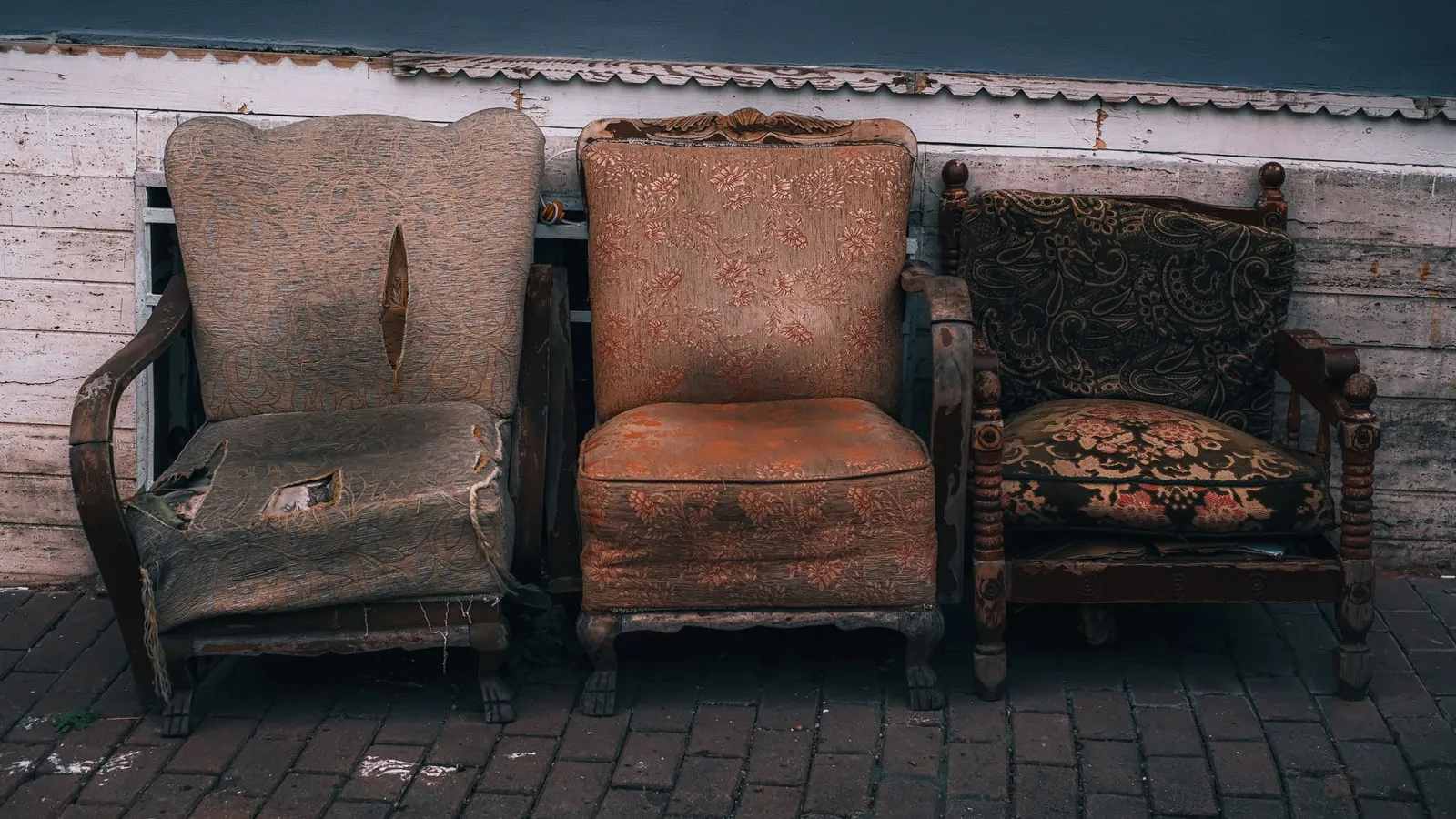
People usually arrive at the workshop with a fabric sample. That is understandable — the cover is what you see, and the reason the job feels urgent. But the sample is the least useful thing to choose first. A beautiful cloth on a frame that rocks, over foam that has collapsed, will look tired within a year. The order below is the one we use when quoting, and it saves a lot of expensive disappointment.
1. Is the frame actually sound?
Put one hand on the back and one on the seat rail and rock the piece gently. It should feel like one object. A dull knock, a creak or visible movement at a corner means a joint has opened. On a timber-framed chair that is usually repairable: the frame comes apart, old glue is cleaned out, and the joint is re-glued and clamped. On a modern sofa with a chipboard or moulded foam frame, the answer may be different.
Look under the seat as well. Webbing stretches, hessian perishes and springs work loose from their clips. None of that is visible from the outside, and all of it affects comfort more than the fabric does. Fixing the frame first is not an upsell; it is the difference between reupholstery and dressing up a problem.
2. What is the filling doing?
Foam is not permanent. Cheap foam loses its resilience, then crumbles; a seat that feels soft on day one can feel like a hammock two years later. We replace foam with a density suited to the seat — firmer for a dining chair that gets pushed back and sat on briefly, softer and more supportive for a sofa. Shape matters too. A seat cushion needs to be cut to the frame, not stuffed until it looks full.
Older pieces sometimes use horsehair, coir or cotton wadding. Those materials can often be cleaned, teased and reused, with new wadding on top. We would rather keep a traditional filling that is still working than replace it with foam because foam is easier.
3. How will the piece actually be used?
A dining chair in a flat used twice a week is a different brief from a family sofa that gets sat on every evening. Be honest about the room, not the showroom. Do people eat on the sofa? Do children climb on it? Is there a cat? Will it sit in strong afternoon sun?
Fabric performance is usually described by abrasion resistance — a Martindale figure in tens of thousands of rubs. For light domestic use, something around 20,000–25,000 is often adequate; a busy family sofa warrants more, and commercial use more again. Abrasion is only one measure: lightfastness, pilling and how the weave handles a spill all matter. We will show you the numbers we have and explain what they do and do not tell you.
4. Who else shares the furniture?
Pets, children and allergies change the specification. Tight weaves are easier to wipe than loose bouclés. Removable, washable covers sound practical until you discover that a washed cover rarely goes back on with the same crisp fit; fixed covers usually look better and last longer, but they demand more care. Feather cushions need plumping; foam and fibre need shaking. None of this is a reason to avoid a fabric, only a reason to choose it knowingly.
If you are supplying your own fabric, bring the full quantity and the specification, not just a swatch. Pattern repeat can add metres quickly, and a cloth sold for curtains may not be strong enough for a seat.
5. Is it worth it to you?
This is the question clients often ask us to answer, and we can only answer part of it. We can tell you whether the frame is good, whether the repair is straightforward, and what the work will cost. We cannot tell you what the piece is worth to your family. A well-made chair that has been in the family for forty years is often worth reupholstering even when a new chair costs less. A flat-pack sofa with a failing frame usually is not.
Our rule of thumb: if the frame is solid and the shape suits the room, reupholstery is worth considering. If the frame flexes, the seat deck is particleboard and the arms are moulded foam, put the money toward something that can be repaired next time. We will say so at the estimate, even when it means less work for us.
If you would like a straight assessment, send photographs of the frame, the underside and the damaged areas. Our reupholstery page has indicative prices, and the FAQ covers fabric supply and lead times.